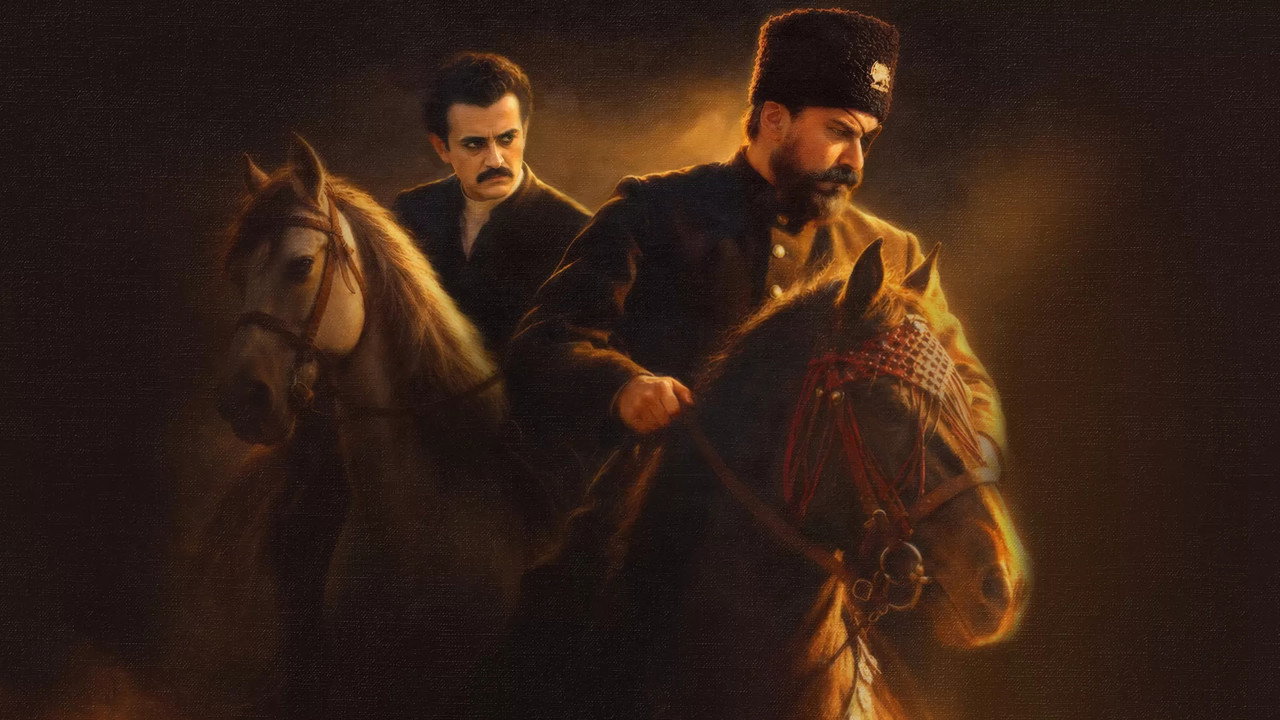
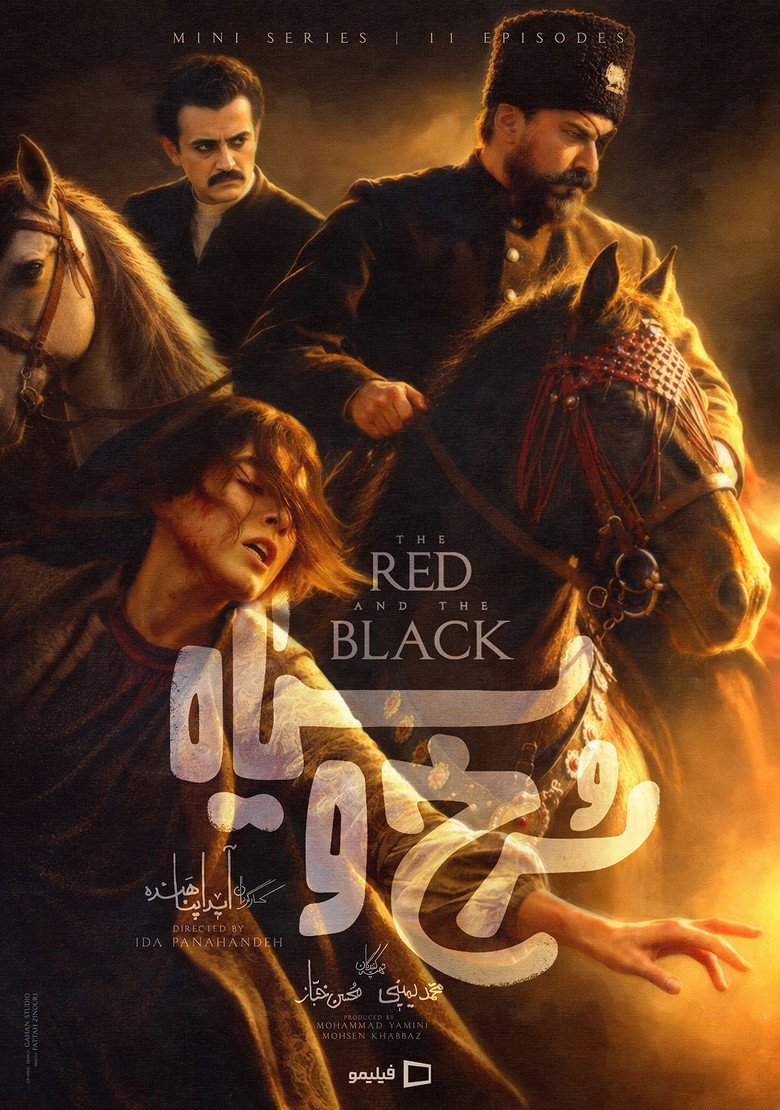
A period setting changes who holds power, what work people do and how openly people can love or argue. The two series featured above, Sorkh o Siah in the Qajar era and Yal in a 1970s village, are only the start. Pardeh's catalogue covers several distinct periods of 20th-century Iran. Here they are roughly in historical order.
The 1940s and 1950s
Savushun is Narges Abyar's large-scale series adaptation of Simin Daneshvar's novel, one of the best-known books in modern Persian literature. It is set in Shiraz in the last years of the Second World War. Khaen Koshi (Killing a Traitor), Masoud Kimiai's film, is set around 1950. A group of men plan to rob Bank Melli, not for themselves but for Mohammad Mosaddegh's national loan campaign. Bamdad-e Khamar returns to old Tehran. The daughter of an aristocratic family falls for a carpenter's apprentice and stands up to her family until they agree.
Before the revolution
In Sorkh Poost (The Warden), set in southern Iran in 1967, an old prison must be emptied for an airport expansion and one prisoner is missing. Khane-ye Arvah follows two men born on the same day in August 1953 whose paths cross again during the war years.
The revolution and its aftermath
Two comedies look at that turning point. In Antique, two antique dealers find business slow after the revolution, until a shrine full of money changes everything. In Kooktel Molotov, a broke man wins a lottery just as the revolution arrives.
The Iran–Iraq War
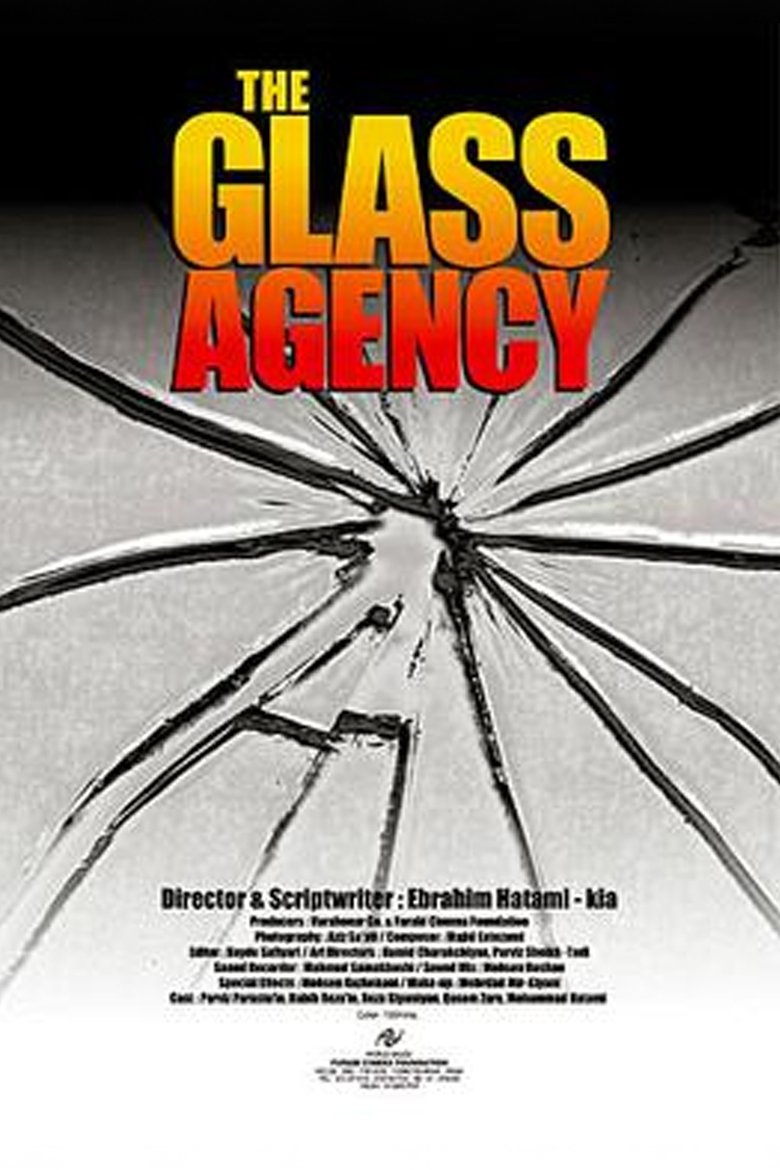
Palayeshgah (The Refinery) follows engineers at the Abadan refinery in 1980. Aseman-e Gharb tells the story of the pilot Ali-Akbar Shiroudi in the first days of the war. Ashk-e Hoor stays at home with a mother waiting for her son to return from the front. Az Karkheh ta Rhein follows a veteran blinded by chemical weapons who is sent to Germany for treatment. The Glass Agency brings a wounded veteran's story back to 1990s Tehran.
A note on accuracy
These are dramas, not documentaries. Where a title is based on real people, such as Shiroudi in Aseman-e Gharb or the goalkeeper Alireza Beiranvand in Beyro, the title page says so. Everything else should be read as fiction set against a real period.
 Love and power in the Qajar era